



Imagine the quiet satisfaction of pulling a golden, perfectly risen loaf from the oven, only to have it ruined by a pan that warps or sticks. Finding high quality bakeware for home shouldn't feel like a confusing maze of marketing jargon and questionable coatings. You've likely experienced the disappointment of uneven browning or tools that lose their luster after just a few uses. It's frustrating when your kitchen equipment doesn't match the dedication you bring to your craft.
This guide serves as your authoritative companion to selecting pieces that balance professional performance with timeless elegance. You'll discover how to identify superior materials that ensure consistent results, while navigating the latest safety regulations for non-stick surfaces. We'll help you curate a thoughtful collection that simplifies your daily routines and brings a sense of polished harmony to your home. By the end, you'll have the confidence to invest in tools that offer both enduring beauty and culinary precision.
Key Takeaways
- You'll learn why material integrity and thermal precision are the true markers of quality rather than just physical weight.
- Compare the benefits of aluminized steel and ceramic to select the best high quality bakeware for home for your unique needs.
- It's easier to build an efficient kitchen by prioritizing a curated collection of essentials over cluttered cabinets filled with unvetted pans.
- Master simple maintenance routines that preserve the finish and performance of your premium tools for years to come.
- Discover how the intersection of aesthetic beauty and functional design can simplify your daily routines and bring harmony to your kitchen.
The Anatomy of High Quality Bakeware for Home
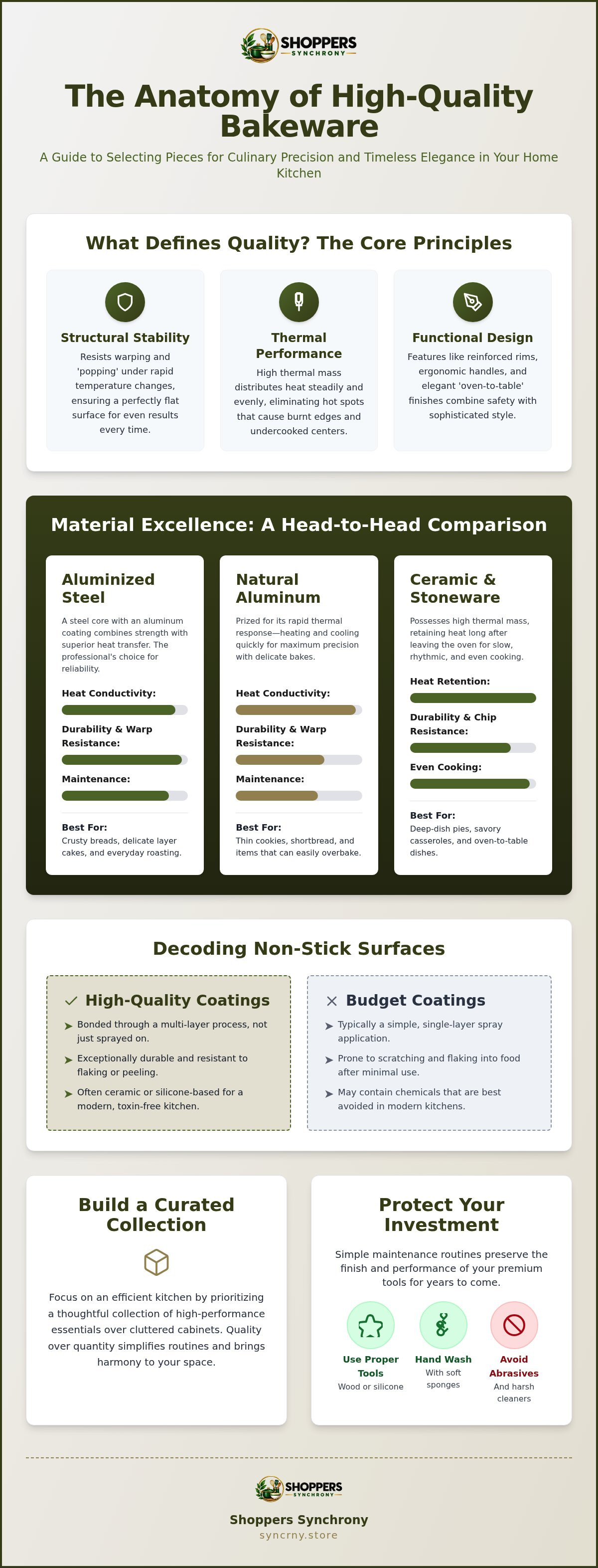
Selecting high quality bakeware for home is a deliberate act of curation that transforms the baking experience from a chore into a ritual. True quality isn't defined by a single feature; it's the thoughtful intersection of material integrity, thermal performance, and intentional design. While many assume 'heavy-duty' simply refers to the weight of a pan, its real value lies in structural stability. A well-constructed pan resists the tension of rapid temperature changes, preventing the frustrating 'pop' and subsequent warping that ruins delicate sponges or roasted vegetables.
High-quality pieces often feature a significant thermal mass. This means the material holds and distributes heat steadily rather than reacting erratically to the oven's heating elements. When combined with reinforced rims and ergonomic handles, these tools offer a sense of quiet confidence and safety that lasts for years. Understanding Cookware and bakeware materials is the first step in building a kitchen that performs as beautifully as it looks.
The Science of Heat Distribution
Consistent results depend on eliminating hot spots, those localized areas where heat concentrates and causes uneven browning or burnt edges. Superior bakeware utilizes metals or ceramics with precise gauge thickness to ensure the entire surface reaches the same temperature simultaneously. This uniformity is vital for maintaining consistent internal temperatures throughout the baking process. Thermal conductivity measures how efficiently heat transfers from the pan to the batter, directly influencing the Maillard reaction that creates those coveted golden-brown crusts and complex flavors.
Form Meets Function: The Aesthetic Component
A cohesive kitchen collection does more than just cook; it contributes to a sense of domestic harmony and personal style. Choosing bakeware with an elegant, polished finish allows for a seamless transition from the oven to the dinner table. This 'oven-to-table' functionality simplifies hosting by reducing the need for extra serving dishes, making daily routines feel more elevated and less cluttered. By selecting timeless finishes rather than chasing fleeting trends, you ensure your collection remains a source of pride and utility as your kitchen evolves. Polished steel and classic ceramic glazes offer a sophisticated look that complements any contemporary living space.
Material Excellence: Comparing Steel, Aluminum, and Ceramic
The choice of material is the most significant factor in achieving professional results. High quality bakeware for home often relies on aluminized steel, a professional favorite that combines the structural strength of a steel core with the superior heat transfer of an aluminum coating. This hybrid material offers exceptional rust resistance and prevents warping, making it ideal for everything from crusty breads to delicate layers. In contrast, natural aluminum is prized for its rapid thermal response. It heats and cools quickly, providing the precision needed for items that can easily overbake, like shortbread or thin cookies.
For those who prefer a slower, more rhythmic baking process, ceramic and stoneware are unmatched. These materials possess high thermal mass, which allows them to retain heat long after leaving the oven. This makes them perfect for deep-dish pies or savory casseroles where even, sustained warmth is essential. When selecting these pieces, look for 18/10 stainless steel accents or reinforced rims to ensure the longevity of your collection. A well-chosen material doesn't just improve your food; it simplifies your daily routines by providing predictable, reliable results.
Aluminized Steel vs. Carbon Steel
Choosing between aluminized steel and carbon steel depends largely on your baking style. Aluminized steel is virtually maintenance-free due to its rust-resistant properties and smooth finish. Carbon steel, while offering incredible heat retention, requires regular seasoning to maintain its surface, much like a cast-iron skillet. If you frequently bake delicate pastries, the consistency of aluminized steel is preferable. However, for artisanal loaves needing a specific crust profile, carbon steel remains a classic choice for those who enjoy the process of maintaining their tools.
The Truth About Non-Stick Surfaces
The market is often saturated with confusing marketing terms, but the difference between premium layers and budget coatings is stark. High-quality non-stick surfaces are bonded through multi-layer processes rather than simple sprays. This ensures the coating won't flake into your food after a few uses. Following New York State's guidance on safe bakeware can help you identify materials that avoid harmful chemicals while maintaining high performance standards.
Many modern bakers are moving toward ceramic or silicone-based options to ensure a toxin-free kitchen, especially as new regulations regarding PFAS take effect in 2026. You can learn more about these choices in our guide on Safe Bakeware: Choosing Non-Toxic Materials. To preserve these surfaces, avoid metal utensils and always hand-wash your pans with gentle detergents. If you are ready to elevate your kitchen's aesthetic and performance, explore our curated bakeware selection to find pieces that resonate with your home's unique style.
Curating Your Essential Baking Collection
True kitchen harmony begins with intentionality. Rather than purchasing exhaustive, pre-packaged sets that often include pieces you'll rarely use, we advocate for a philosophy of curation over consumption. By selecting fewer, higher-quality items, you ensure that every tool in your cabinet serves a clear purpose and meets a high standard of performance. Investing in high quality bakeware for home allows you to move away from cluttered cabinets and toward a streamlined environment where each piece is a joy to use.
An essential collection typically centers around the 'Essential Four' workhorses. These versatile foundations provide the capability to handle nearly any recipe:
- The Half-Sheet Pan: A multipurpose tool for everything from roasted root vegetables to delicate sponge rolls.
- The Rectangular Cake Pan: Often measuring 9x13 inches, this is the standard for brownies, focaccia, and layered bakes.
- The Loaf Pan: Essential for artisanal breads, quick loaves, and even terrines.
- The Muffin Tin: A necessity for morning pastries and individual savory tarts.
Once these foundations are established, you can introduce specialized pieces like Bundt pans or brownie pans. These items offer specific structural benefits, such as intricate designs or crisp edges, that a general-purpose pan cannot replicate. Identifying these versatile pieces ensures your kitchen remains functional without becoming overwhelmed by unnecessary clutter.
Building Your Set Lvl 1: The Daily Baker
For those who find themselves in the kitchen daily, focus on high-gauge aluminum sheet pans. Aluminum is a favorite for its responsiveness. A standard 9x13 inch pan remains perhaps the most versatile tool you can own, transitioning easily between sweet desserts and savory dinners. To protect the longevity of these pans, complement them with high-quality kitchen utensils made of silicone or wood. These materials prevent surface scratches and maintain the integrity of your tools over years of use.
Level 2: The Artful Entertainer
As your confidence grows, you might expand your collection to include ceramic tart pans and pie dishes. These pieces offer an elegant presentation that moves seamlessly from the oven to a beautifully set table. Specialized bakeware is the secret to creating showstopping celebration cakes that anchor a memorable gathering. For a deeper look at how to assemble these pieces into a cohesive collection, explore our A Curated Guide to the Best Bakeware Sets.
Maintenance and Care: Protecting Your Investment
Owning high quality bakeware for home is only the beginning of a rewarding culinary journey. To ensure these pieces remain a cornerstone of your kitchen for decades, a thoughtful maintenance routine is essential. While many modern pans claim to be dishwasher safe, the harsh chemicals and high heat of a dishwasher cycle can strip away the polished finish of aluminized steel and degrade the integrity of non-stick coatings. Hand-washing with mild soap and a soft sponge remains the gold standard for preserving the performance and aesthetic beauty of your tools. This small investment of time safeguards the thermal precision you rely on for consistent results.
Daily use occasionally leads to the buildup of polymerized oil, that stubborn, amber residue that feels tacky to the touch. Rather than reaching for abrasive steel wool, which can create microscopic scratches, use a gentle paste of baking soda and water to lift the residue. Selecting the right tools is equally vital for longevity. Always opt for silicone, wood, or nylon utensils to avoid scarring the surface of your pans. By treating your collection with this level of care, you maintain a sense of domestic harmony and ensure your kitchen remains a place of effortless productivity.
Proper Cleaning Techniques
Natural aluminum requires specific attention to prevent the dull gray oxidation that can occur with improper care. To maintain its bright, professional appearance, avoid soaking aluminum pans for extended periods and dry them immediately after washing. Submerging a hot pan into cold water causes immediate structural stress, potentially leading to permanent warping or microscopic cracks in the finish. When your pans are clean, store them with felt or silicone dividers between each piece. This simple step prevents stacking scratches and keeps your collection looking as polished as the day you acquired it.
Troubleshooting Common Pan Problems
Pans typically warp due to extreme temperature fluctuations or being used at heats exceeding their design limits. If a pan loses its flat profile, it can lead to uneven oil distribution and inconsistent browning. Recognizing when a non-stick coating has reached the end of its life is also crucial for safety; once the surface begins to flake or loses its release properties despite deep cleaning, it's time to retire the piece. Transitioning to 'buy-it-for-life' bakeware reduces environmental waste and ensures you aren't constantly replacing inferior tools. If you're ready to upgrade your kitchen with tools built to last, explore our curated selection of premium bakeware designed for the modern home.
The Shoppers Synchrony Approach to Kitchen Harmony
At Shoppers Synchrony, we believe that the tools you choose are the silent partners in your daily rituals. High quality bakeware for home isn't merely a functional necessity; it's a fundamental component of a well-lived life. When your kitchen is equipped with pieces that balance aesthetic beauty with professional-grade performance, the friction of daily tasks begins to dissolve. This sense of domestic harmony allows you to focus on the creative joy of baking rather than the frustration of unreliable equipment. We prioritize enduring value over fleeting kitchen trends, ensuring that every item we offer contributes to a cohesive and efficient home environment.
A curated kitchen simplifies your routines by removing the guesswork. Instead of a cabinet overflowing with unvetted pans, a thoughtful selection of premium tools provides a reliable foundation for every recipe. This methodical approach to outfitting your space fosters a sense of quiet confidence. You aren't just buying a pan; you're investing in the longevity and craftsmanship that define modern taste. Our commitment to quality ensures that these tools integrate seamlessly into your contemporary living space while standing up to the rigors of frequent use.
Curated Excellence for Every Home
Our selection process is rigorous and intentional. We vet each piece of bakeware for its thermal precision and its ability to complement a polished home aesthetic. The Shoppers Synchrony promise is one of reliable curation, offering you an authoritative guide to the best tools available without the noise of an exhaustive catalog. If you're ready to begin your journey toward a more refined kitchen, our best-selling sheet pans and ceramic dishes offer the perfect starting point for your first upgrade. These essentials represent the intersection of form and function that we champion for every household.
Beyond the Pan: A Holistic Kitchen
True kitchen harmony extends beyond a single tool. By integrating your bakeware with our coordinated dinnerware and cooking tools, you create a holistic environment that feels both inspiring and grounded in utility. There is profound emotional value in establishing family traditions using tools that can be passed down through generations. High-quality materials like aluminized steel and fine stoneware become part of your home's story, evolving with your family as you master new techniques. We invite you to explore our full kitchenware range to find the pieces that resonate with your personal style and elevate your daily experiences.
Elevating Your Culinary Rituals
Investing in your kitchen is about more than just acquiring tools; it's about creating a space where creativity and domestic harmony flourish. You've discovered how the right material choice ensures thermal precision and why a curated collection of essential pieces serves you better than a cabinet full of unvetted sets. By establishing a simple maintenance routine and avoiding the harsh environment of the dishwasher, you protect the longevity and aesthetic beauty of your tools for years to come. Selecting high quality bakeware for home allows you to bake with quiet confidence, knowing your results will be consistent and your environment will remain polished and uncluttered.
Our selection process at Shoppers Synchrony prioritizes timeless designs and premium materials that deliver professional results. We focus on everyday functionality to help you simplify your routines and elevate your daily life. We invite you to begin your journey toward a more inspired and efficient kitchen by discovering pieces that resonate with your personal style. Explore Our Curated Bakeware Collection and experience the satisfaction of tools built for a well-lived life. Your next golden loaf or perfectly risen cake is just one thoughtful choice away.
Frequently Asked Questions
Is expensive bakeware actually worth it for a beginner?
Investing in premium tools is definitely worth it for beginners because high quality bakeware for home eliminates the technical hurdles of uneven heat. Cheaper pans often lead to burnt bottoms and raw centers, which can discourage a new baker. Starting with a few well-crafted pieces provides a reliable baseline for success. This approach allows you to focus on mastering techniques rather than fighting your equipment, ensuring your early baking experiences are rewarding and consistent.
What is the safest material for non-toxic baking?
Natural aluminum and ceramic are widely considered the safest options for non-toxic baking. This is increasingly important as several states, including Colorado and Connecticut, have enacted laws banning PFAS in cookware starting in 2026. High-quality ceramic coatings provide a natural release without the need for traditional chemicals. Choosing these materials ensures your kitchen remains a safe environment while delivering the professional results you expect from a premium collection.
Can I use metal utensils on high-quality non-stick pans?
You should avoid using metal utensils on any high-quality non-stick surface. Even the most durable bonded coatings can suffer microscopic scratches from sharp edges, which eventually leads to flaking and lost performance. Instead, opt for silicone, wood, or nylon tools that glide across the surface without causing damage. This simple habit preserves the integrity of your investment and keeps your pans in pristine condition for years of frequent use.
How do I stop my baking sheets from warping in the oven?
Preventing warping requires avoiding rapid temperature fluctuations, also known as thermal shock. Always allow your pans to cool completely before rinsing them in water. Additionally, choosing pans with reinforced rims and a heavy-duty gauge provides the structural integrity needed to resist tension under high heat. High-quality materials distribute heat more evenly across the surface, which reduces the internal stress that causes thinner pans to pop or twist during the baking process.
What is the difference between aluminized steel and stainless steel?
Aluminized steel is a professional favorite because it combines the strength of steel with the superior conductivity of aluminum. Stainless steel is incredibly durable and non-reactive, but it doesn't conduct heat as efficiently as aluminum, which can lead to hot spots. While stainless is excellent for roasting, aluminized steel provides the precise thermal response required for delicate cakes and breads. It offers the best of both worlds for a high-performing home kitchen.
Should I buy a bakeware set or individual pieces?
We recommend purchasing individual pieces rather than exhaustive sets to ensure every tool in your kitchen has a purpose. Many pre-packaged sets include specialized pans you may never use, leading to unnecessary clutter. By selecting high quality bakeware for home based on your specific baking habits, you build a collection that feels intentional and refined. Focus on the essential four workhorses first, then add specialized pieces as your skills and interests grow.
How often should I replace my home bakeware?
Premium metal bakeware, such as natural aluminum or aluminized steel, can last a lifetime if cared for properly. These materials don't degrade over time and actually become more reliable as you learn their thermal patterns. However, non-stick coatings have a finite lifespan and should be replaced if you notice flaking, deep scratches, or a significant loss in food release properties. Investing in buy-it-for-life materials reduces waste and provides enduring value for your household.
Can high-quality bakeware go in the dishwasher?
While some brands claim to be dishwasher safe, we strongly advise hand-washing your premium bakeware. The aggressive detergents and high-pressure cycles in a dishwasher can oxidize natural aluminum, leading to a dull gray finish. For non-stick surfaces, these conditions accelerate the breakdown of the coating. Hand-washing with mild soap and a soft sponge is a gentle ritual that maintains the polished aesthetic and professional performance of your kitchen collection.


