



Your kitchen deserves more than a collection of warped pans and flaking non-stick coatings that eventually end up in a landfill. At Shoppers Synchrony, we believe the tools you use should be as enduring as the memories you create around the dinner table. It's a common frustration to watch a beautiful recipe suffer because of hot spots or a pan that bows under the pressure of a high-heat oven.
You likely value the peace of mind that comes from knowing your equipment is safe, durable, and capable of professional results. Choosing 18/10 stainless steel bakeware is more than a simple purchase; it's an investment in culinary harmony and long-term health. This specific grade of steel offers a level of rust resistance and luster that standard materials simply cannot match, ensuring your kitchen remains both beautiful and functional for years to come.
In this guide, you'll discover why this material remains the gold standard for a modern, non-toxic kitchen. We'll explore how it achieves consistent browning, why it resists warping in high heat, and the practical techniques you can use to prevent sticking. By the end, you'll have the knowledge to curate a bakeware collection that performs with quiet confidence every single day.
Key Takeaways
- Understand the precise science behind the 18/10 alloy and how the specific ratio of chromium and nickel ensures lasting rust resistance and a polished, professional finish.
- Compare the performance of 18/10 stainless steel bakeware against traditional materials to see why it remains the preferred choice for even browning and non-reactive cooking.
- Master essential techniques for preparation and maintenance, including the use of parchment and proper preheating to ensure a seamless food release every time.
- Learn how to curate a focused set of high-quality essentials that simplify your daily routines while bringing a sense of aesthetic harmony to your modern home.
The Pursuit of Culinary Excellence: Why Material Matters in Bakeware
The modern kitchen is evolving. We're witnessing a meaningful shift away from a "disposable" culture where kitchen tools are treated as temporary items to be replaced every few seasons. Instead, there's a growing appreciation for enduring, high-quality essentials that offer both performance and a polished aesthetic. At Shoppers Synchrony, we believe that elevating your daily routines starts with the tools you hold in your hands. Choosing the right material isn't just about utility; it's about creating a sense of domestic harmony through reliability and craftsmanship.
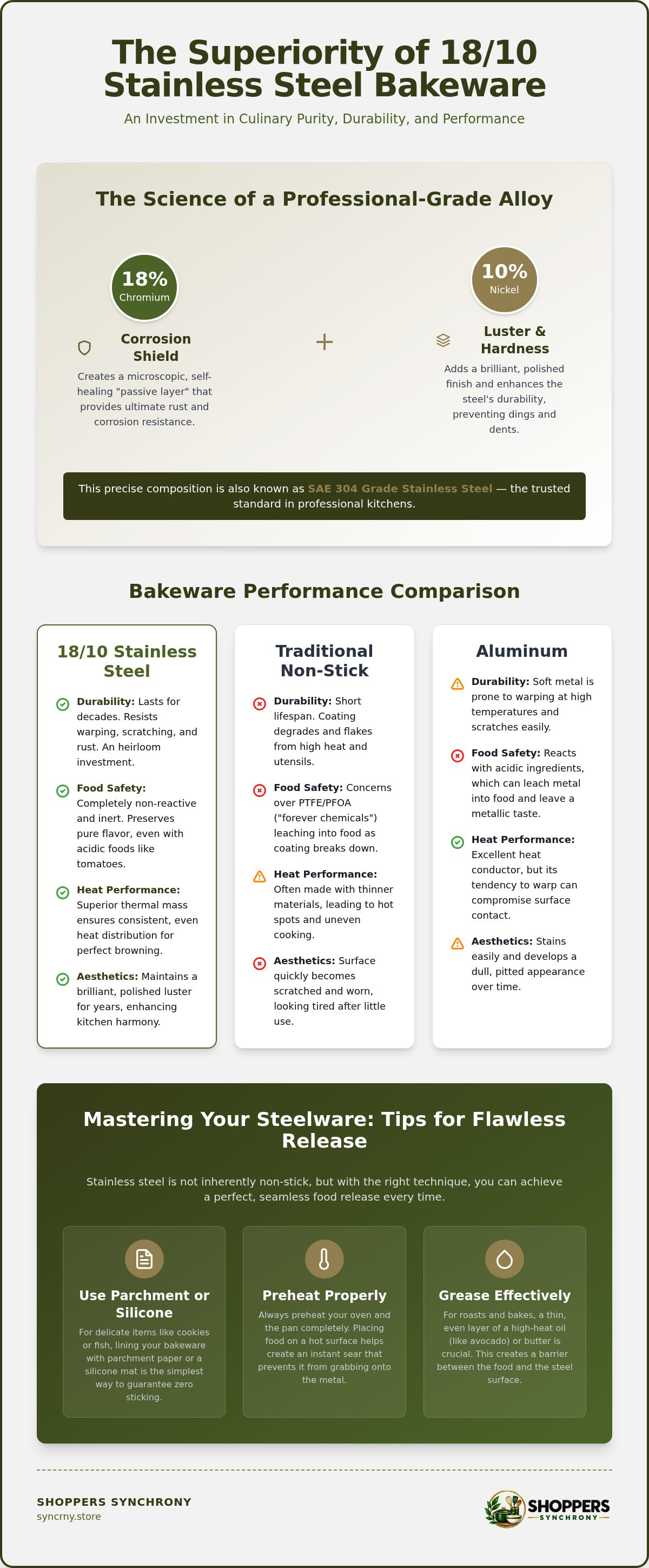
At the center of this movement is 18/10 stainless steel bakeware. This premium alloy is defined by its specific composition: 18% chromium and 10% nickel. Often classified as SAE 304 stainless steel, this material is the industry standard for those who prioritize longevity. The chromium acts as a shield against rust and corrosion, while the nickel provides that signature brilliant luster and added hardness. It's a combination that ensures your pans look as beautiful after years of use as they did the day you brought them home.
The Problem with Traditional Non-Stick Coatings
Many home cooks have experienced the frustration of watching a non-stick pan begin to fail. Traditional coatings, often involving PTFE or PFOA, are prone to degradation when exposed to high heat over time. This leads to the inevitable flaking of the surface, which can migrate into your food and eventually renders the pan useless. Beyond the physical nuisance, there are valid environmental and health concerns regarding the persistence of these "forever chemicals" in our living spaces. Professional-grade steel offers an elegant solution through its inherent chemical stability. This means the surface is completely inert and won't release harmful substances or break down, regardless of how often you use it.
Aluminum vs. Steel: The Battle for Heat Distribution
While pure aluminum is frequently used for its heat conductivity, it comes with a significant drawback: reactivity. When you roast acidic ingredients like tomatoes, citrus, or vinegar-based marinades, the metal can react with the food, often leaving behind a faint metallic aftertaste. Using 18/10 stainless steel bakeware ensures flavor purity because the surface is non-reactive, keeping your recipes exactly as you intended. Furthermore, high-quality steel provides superior thermal mass. This structural density allows the pan to absorb and distribute heat with more consistency, effectively preventing the "twisting" or warping that often plagues thinner, less durable alternatives during high-temperature roasting.
Understanding the 18/10 Standard: The Science of Professional Grade Steel
The "18/10" designation isn't just a marketing label; it's a precise chemical recipe for durability. The 18% chromium content is the primary defender, while the 10% nickel acts as the "secret ingredient" that elevates 18/10 stainless steel bakeware from industrial to artisanal. This specific blend is what professionals call "304 Grade" steel. In high-traffic restaurant kitchens, this is the standard because it survives constant use without degrading. Lower-grade pans, such as 18/0, lack the nickel component. This absence often results in a duller appearance and a higher risk of leaving a metallic taste in delicate pastries or savory roasts.
According to scientific studies on stainless steel, the stability of this alloy is critical for food safety and flavor integrity. The high nickel content ensures that the metal remains non-reactive even during long baking cycles or when roasting acidic vegetables. If you're looking to upgrade your kitchen with tools that reflect your commitment to quality, exploring a curated selection of bakeware can help you find pieces that meet these exacting standards. Investing in the right grade of steel simplifies your daily tasks by providing predictable, high-level performance every time you turn on the oven.
Corrosion Resistance and Longevity
When chromium is exposed to oxygen, it creates an invisible, microscopic "passive layer." This self-healing shield prevents oxidation from reaching the underlying steel, effectively stopping rust before it starts. While a standard pan might last two or three years before the surface fails, 18/10 stainless steel is designed to last decades. It maintains its mirror-like finish through hundreds of dishwasher cycles, resisting the pitting and staining that usually signal the end of a pan's life.
Warp-Resistant Engineering and Gauge
The physical weight of your bakeware matters as much as its chemistry. Premium 18/10 stainless steel bakeware typically utilizes 22-gauge steel or thicker. This density is what prevents that alarming "popping" sound you might hear when a thin pan twists under the stress of a 450°F oven. A thicker metal gauge ensures that heat diffuses evenly across the entire surface, eliminating the hot spots that lead to burnt edges and raw centers. This structural integrity is essential for achieving the consistent, golden results that define professional-level baking.
Performance Comparison: Why Stainless Steel Outlasts Traditional Alternatives
Choosing the right material for your kitchen is often a balancing act between performance and practicality. While carbon steel and cast iron certainly have their place, 18/10 stainless steel bakeware emerges as the quintessential all-rounder. It bridges the gap between the rugged durability of industrial metals and the refined elegance required for a modern home. Whether you're roasting root vegetables at high heat or baking a delicate sponge cake, this material provides a neutral, reliable surface that won't interfere with your flavors. It's a choice that reflects a commitment to both quality and domestic harmony.
When we evaluate materials across heat retention, maintenance, reactivity, and durability, steel consistently takes the lead for daily use. Unlike carbon steel, it requires no complex seasoning rituals to remain functional. Unlike cast iron, it doesn't react with acidic glazes or citrus marinades. This versatility simplifies your kitchen routine, allowing you to move from the oven to a beautifully set table with a single, polished piece of equipment. The brilliant luster of the metal provides a modern, clean look that complements any dinnerware set, turning a functional tool into a centerpiece of your meal presentation.
Stainless Steel vs. Ceramic Bakeware
Ceramic dishes are beloved for their heat retention, but they're inherently fragile. A simple bump against the sink or a sudden temperature shift, known as thermal shock, can cause immediate cracking or chipping. In contrast, 18/10 steel is virtually indestructible. It responds rapidly to oven temperature changes, giving you precise control over the baking process. Storage is also significantly easier. You can stack steel pans without the constant worry of protective padding or accidental breakage, making it a more practical choice for a busy, organized kitchen.
Stainless Steel vs. Cast Iron
Cast iron is a powerhouse for searing, but its significant weight can make it cumbersome for daily baking tasks. Maneuvering a heavy iron pot in and out of a hot oven requires physical effort that many home bakers find unnecessary for a simple weeknight meal. Maintenance is another significant hurdle. Cast iron demands a strict "no-soap" rule and immediate drying to prevent rust. With 18/10 stainless steel bakeware, you enjoy effortless cleaning with standard dish soap or even the dishwasher. This ease of care, combined with superior temperature control, makes it the better choice for delicate pastries that need to cool or heat quickly to achieve the perfect crumb. It's the dependable companion for the baker who values both time and results.
Mastering the Technique: Tips for Baking and Maintaining Your Steelware
Owning professional tools is only half the journey. The other half is understanding how to work in harmony with them. While 18/10 stainless steel bakeware is celebrated for its durability, many users worry about food sticking to the surface. This challenge is easily overcome by adopting a "careful curator" mindset. By treating your pans with a few specific techniques, you ensure they remain as functional as they are beautiful for decades to come.
The Secret to Non-Stick Baking on Steel
Successful release starts with physics. When cold food touches a cold metal surface, proteins tend to bond with the steel's microscopic pores. To prevent this, you should utilize the Leidenfrost effect. This occurs when you preheat your pan until a drop of water beads up and "dances" across the surface. This vapor barrier acts as a natural cushion between the food and the metal. For savory roasting, always preheat the pan before adding your fat and ingredients to ensure a clean lift.
Using the right fats is equally vital. Butter provides exceptional browning for pastries, but for high-heat roasting above 400°F, choose oils with a high smoke point like grapeseed or avocado oil. Additionally, try to bring your ingredients to room temperature before they hit the oven. Cold items cause the pan's temperature to drop instantly, which increases the likelihood of sticking. For delicate cakes, the classic parchment paper method remains the gold standard for a perfect, professional release every time.
Care and Maintenance: Keeping the Luster
Maintaining the brilliant shine of your 18/10 steel requires a gentle touch. Avoid using steel wool or abrasive scouring pads. These create micro-scratches that dull the finish and provide new places for food to cling during future use. Instead, use a soft sponge and a specialized cleaner like Bar Keepers Friend to remove the "rainbow" heat tints that sometimes appear after high-temperature use. These tints are simply a result of superficial oxidation and disappear instantly with a mild acidic cleaner or a splash of vinegar.
For stubborn, burnt-on grease, try the deglazing technique. While the pan is still warm, add a small amount of water or broth to loosen the caramelized bits. This makes cleanup effortless and preserves the smooth surface without the need for aggressive scrubbing. If you're ready to upgrade your kitchen with tools that last a lifetime, you can browse our premium bakeware collection to find your next favorite piece.
Elevating Your Home: Curating a Timeless Bakeware Collection
A well-lived life is often reflected in the quality of the objects we use daily. When you choose 18/10 stainless steel bakeware, you're moving beyond mere utility toward a more intentional way of living. A cohesive set of high-quality tools creates a "harmonious kitchen" aesthetic that simplifies your routine and brings a sense of quiet confidence to every meal. Rather than accumulating a mismatched assortment of disposable pans that eventually warp or peel, focus on a curated selection that serves multiple purposes. This sustainable approach reduces household waste and ensures that every piece in your cupboard is one you truly value and trust.
The Essential Pieces for Every Baker
Building a collection doesn't require an exhaustive catalog of specialty items. Start with the backbone of a functional kitchen: a heavy-duty cookie sheet or jelly roll pan. Its versatility extends from roasting seasonal vegetables to baking delicate, golden-brown biscuits. Next, consider the 9x13 roasting pan. This workhorse is equally adept at handling a hearty Sunday roast or a decadent sheet cake, providing the thermal mass needed for consistent results across the entire surface. A square baker rounds out the essentials, proving perfect for smaller gratins, cobblers, or brownies. By adopting this minimalist approach, you reclaim your storage space and elevate your cooking experience with tools that never fail to perform.
Approachable Luxury: Integrating Style and Function
There is a distinct psychological benefit to using tools that feel substantial and well-made. Polished steel offers a timeless look that effortlessly complements modern, minimalist kitchen designs, reflecting a taste for both craftsmanship and clarity. It transitions beautifully from the intense heat of the oven to the center of your dining table, maintaining an air of sophisticated hospitality throughout the evening. This intersection of form and function is at the heart of our philosophy at Shoppers Synchrony. We believe that quality tools are a foundational component of domestic harmony. We invite you to Explore our curated bakeware essentials to find the pieces that will complete your home. Investing in quality today means enjoying a more organized, beautiful, and efficient kitchen for a lifetime.
Investing in a Lifetime of Culinary Harmony
Transitioning to a kitchen that prioritizes quality over quantity is a profound way to simplify your daily routines. You now understand how the precise balance of chromium and nickel provides the rust resistance and luster necessary for a lifetime of reliable use. By choosing 18/10 stainless steel bakeware, you're opting for a non-toxic, warp-resistant surface that respects the integrity of your ingredients and your health. This material bridges the gap between professional performance and the approachable luxury of a well-curated home.
Our collection is hand-selected for enduring quality and features a timeless minimalist design that integrates seamlessly into any contemporary living space. We're pleased to provide free shipping on curated kitchen essentials to help you begin your journey toward a more organized and efficient kitchen. Discover the Art of Baking with Our Premium 18/10 Stainless Steel Collection today and feel the difference that thoughtful craftsmanship makes. It's time to enjoy the quiet confidence that comes from using tools built to last as long as the memories you create around your table.
Frequently Asked Questions
Is 18/10 stainless steel bakeware non-toxic and safe for high-heat baking?
Yes, 18/10 stainless steel is entirely non-toxic and remains one of the safest materials for high-heat baking. Unlike pans with non-stick coatings that can degrade and release fumes, this professional-grade steel is chemically stable and inert. It won't leach metallic flavors or harmful chemicals into your food, even when roasting at 450°F. This makes it a dependable choice for health-conscious cooks who prioritize both safety and long-term performance in their home.
Does 18/10 stainless steel bakeware warp in the oven at high temperatures?
High-quality 18/10 stainless steel bakeware is specifically engineered to resist warping through its superior thermal mass and thickness. While thinner, lower-grade pans might bend or distort when exposed to sudden heat, premium steel pans distribute temperature changes more evenly. Choosing a pan with a thicker gauge ensures the structural integrity remains intact during intense roasting sessions. This provides consistent results without the frustration of a deformed pan that no longer sits flat on your oven rack.
How do I prevent cookies and cakes from sticking to a stainless steel pan?
Achieving a perfect release on stainless steel requires simple, effective techniques like using parchment paper or the classic "grease and flour" method. For savory items, preheating the pan before adding oil creates a natural vapor barrier that prevents protein bonding. You can also ensure food doesn't stick by letting ingredients reach room temperature before they hit the oven. These small adjustments in your routine turn a professional steel surface into a highly functional, easy-to-use tool.
Is 18/10 stainless steel the same as 304 grade steel?
Yes, 18/10 is a specific designation within the broader 304-grade stainless steel family. The "18/10" refers to the precise percentage of chromium and nickel added to the alloy to enhance its durability and appearance. While all 18/10 steel is 304-grade, the specific nickel content in the 18/10 variety provides the signature luster and superior rust resistance that professionals demand. This standard ensures your kitchen tools maintain their polished, high-end look through years of consistent daily use.
Can I put my 18/10 stainless steel bakeware in the dishwasher?
You can absolutely clean your 18/10 stainless steel bakeware in the dishwasher without fear of damaging the material. Unlike aluminum or cast iron, this high-grade alloy is remarkably resistant to the harsh detergents and high-pressure cycles of modern machines. It won't pit, rust, or lose its brilliant shine over time. This ease of maintenance simplifies your cleanup process, allowing you to spend more time enjoying your meal and less time scrubbing over the kitchen sink.
How do I remove burnt-on grease or rainbow stains from my stainless steel pans?
Removing stubborn stains is straightforward when you use the right approach. For "rainbow" heat tints, a quick wipe with a mild acidic cleaner like white vinegar restores the luster instantly. If you're dealing with burnt-on grease, applying a non-abrasive powder like Bar Keepers Friend with a soft cloth will lift the residue without scratching the finish. These simple steps preserve the smooth, mirror-like surface that makes your collection feel substantial and well-made for a lifetime.
Why is 18/10 stainless steel more expensive than other types of bakeware?
The higher cost of professional-grade steel reflects its status as a lifetime investment rather than a temporary purchase. The addition of 10% nickel is a significant factor in the price; this element provides the exceptional durability and corrosion resistance that lower-grade metals lack. When you consider that a single high-quality steel pan can outlast several cheaper alternatives, the initial investment becomes a practical way to reduce long-term costs and unnecessary household waste.
Do I need to season my stainless steel bakeware like cast iron?
You don't need to season stainless steel bakeware to maintain its performance or protect its surface. Unlike cast iron, which relies on a layer of polymerized oil to remain non-reactive and rust-free, 18/10 steel is naturally protected by its own microscopic chromium-oxide layer. This means you can use soap and water freely without worrying about stripping a finish. It provides a clean, neutral surface that's ready to use the moment you take it out of the box.


