



Have you ever wondered why the same recipe produces a fudgy masterpiece in one kitchen and a dry, crumbly disappointment in another? It's a common frustration to invest in premium ingredients only to end up with brownies that are burnt on the edges but raw in the middle. You likely agree that the kitchen should be a place of creative joy rather than a struggle with stubborn residue or choosing the wrong brownie bakeware. When 71% of consumers report that texture is the key driver of their food enjoyment, the tools you use become just as important as the chocolate you melt.
This guide will help you master the science of textures by selecting the ideal materials for your specific baking style. We believe that quality and aesthetic beauty are essential components of a well-lived life; your pans should reflect that standard of craftsmanship. You'll learn how different materials dictate heat precision, helping you achieve the perfect fudgy-to-cakey ratio every time. We'll explore the best shapes for even baking and provide tips for maintaining pan longevity, ensuring your kitchen remains a curated space of efficiency, harmony, and grace.
Key Takeaways
- Learn how thermal conductivity influences heat distribution to achieve your preferred balance of fudgy centers and crisp edges.
- Compare the performance of metal and ceramic brownie bakeware to find the ideal match for your oven and aesthetic.
- Identify how a single inch of difference in pan size can alter baking times and the final height of your brownies.
- Master the art of parchment lining and gentle cleaning to maintain the pristine condition and non-stick properties of your pans.
- Simplify your kitchen routine by investing in a curated collection of timeless essentials that offer both beauty and durability.
How Bakeware Influences Brownie Texture and Consistency
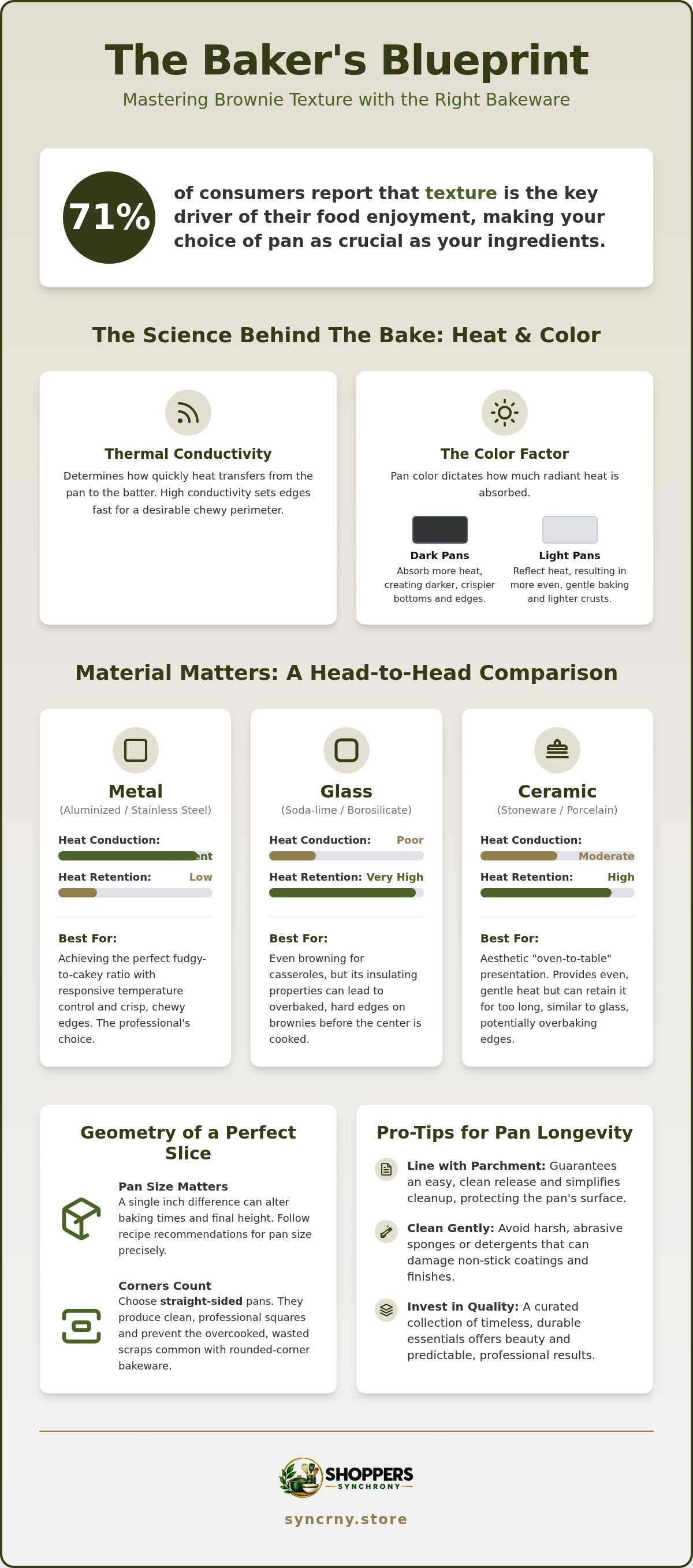
The journey to a perfect brownie begins long before you crack an egg; it starts with the vessel. The relationship between thermal conductivity and the final product is a matter of pure physics. High-conductivity materials transfer heat rapidly from the oven air to the batter, setting the edges early to create that coveted chewy perimeter. In contrast, the specific choice of bakeware materials dictates how the center cooks, balancing the exterior crunch with internal softness.
In the context of brownie baking, thermal mass represents the material's capacity to absorb and retain heat, ensuring a steady temperature that guards against the cooling effects of opening the oven door.
Pan color also plays a significant role in radiant heat absorption. Darker pans absorb more energy, which often leads to over-browned or even burnt bottoms before the middle is fully set. Light-colored brownie bakeware reflects heat instead, allowing for a more controlled, uniform rise and a delicate finish. This balance ensures your kitchen remains a place of domestic harmony rather than a struggle with inconsistent results. Investing in pieces that manage heat effectively is the first step toward achieving professional quality at home.
The Science of the Fudgy Center
Achieving a dense, truffle-like interior requires a deliberate, slow heat transfer. If the heat reaches the center too quickly, the proteins and starches set into a crumbly, cake-like structure. Specialized pans with significant wall height help insulate the batter, managing moisture evaporation so the center stays moist and rich. These professional-grade tools distribute heat so evenly that they prevent the "doming" effect. This common issue occurs when edges rise and dry out while the middle remains sunken, but quality bakeware ensures a flat, elegant surface across the entire pan.
Achieving the Desired Corner-to-Center Ratio
For many bakers, the corner piece is the ultimate prize. Pan geometry directly influences this experience. Some enthusiasts prefer specialty pans that maximize surface area contact with the metal, creating more "edges" per batch. However, even in a standard square pan, the design of the corners matters for a polished result. Straight-sided pans are the hallmark of a sophisticated kitchen. They allow for clean-cut, professional squares that look as if they came from a high-end boutique. Don't settle for the rounded corners found in cheap bakeware; they trap heat unevenly and result in wasted, overcooked scraps rather than uniform, shareable treats.
Material Matters: Comparing Metal, Glass, and Ceramic Bakeware
Selecting the right brownie bakeware is an exercise in understanding how different surfaces interact with heat. Every material possesses a unique thermal personality that dictates the final crumb structure of your dessert. While a recipe provides the blueprint, the pan provides the environment where the science of baking actually happens. Professionals often favor aluminized steel because it offers rapid, even heat distribution. This efficiency ensures the batter reaches its setting temperature quickly, which helps in achieving that perfect fudgy-to-cakey ratio without the risk of hot spots.
In contrast, glass dishes can be quite temperamental for delicate bakes. Because glass is an effective insulator, it takes a significant amount of time to heat up and retains that heat long after it leaves the oven. This often leads to overbaked, hard edges while the center remains undercooked. It's helpful to understand how your choice of pan material affects your bake before you begin your next project. Choosing the correct vessel ensures your kitchen remains a place of creative joy rather than technical frustration.
The Professional Edge of Stainless Steel and Aluminum
Metal is the most responsive material for temperature adjustments. If you notice your brownies browning too quickly, a metal pan reacts almost instantly to a lower oven setting. The gauge of the metal is a critical factor in performance; thicker, heavy-duty pans resist the warping that often plagues thinner alternatives. Premium 18/10 stainless steel offers exceptional longevity and craftsmanship, standing up to years of frequent use while maintaining a polished, professional appearance. This durability makes it a timeless essential for any well-ordered home.
Aesthetic and Functional Benefits of Ceramic
Ceramic bakeware maintains domestic harmony by doubling as a sophisticated serving piece. There's a quiet confidence in bringing a beautiful dish directly from the oven to the table, elevating a simple dessert into a curated experience. Ceramic offers a gradual heat curve, making it an excellent choice for thick, blonde brownies that benefit from a slower, more deliberate bake. To protect these pieces, always avoid thermal shock. Never move a ceramic dish directly from a cold refrigerator into a hot oven, as the sudden temperature shift can damage the material.
When assessing non-stick coatings, look for modern ceramic-based alternatives that prioritize safety without sacrificing performance. These surfaces offer an effortless release, ensuring that your brownies retain their clean edges and sophisticated shape. Selecting curated bakeware essentials allows you to focus on the art of the bake, transforming a daily routine into a moment of genuine domestic pleasure.
Selecting the Ideal Shape and Size for Your Baking Style
Precision in the kitchen often comes down to simple geometry. When selecting your brownie bakeware, it's easy to assume that an 8-inch and 9-inch pan are interchangeable, but this one-inch difference radically alters the thermodynamics of your bake. A 9x9 pan provides roughly 25% more surface area than its 8x8 counterpart. Because the batter spreads thinner in the larger vessel, the heat penetrates the center much faster, which can lead to overbaked results if you don't adjust your timer accordingly. Understanding this ratio is essential for maintaining domestic harmony and ensuring every batch meets your high standards for texture.
Volume and depth also play vital roles in the final presentation. A recipe designed for a thick, fudgy square may lose its decadent appeal if stretched across a pan that's too wide. Before you pour your batter, calculate the depth to ensure there's enough room for a slight rise without overflowing. Safety and ease of use are equally important; always look for pans with generous rimmed edges. These sturdy handles provide a secure grip when moving heavy dishes from the oven to the cooling rack, protecting both your hands and your beautiful creations.
Standard Square Pans for Classic Results
The 8-inch square pan remains the gold standard for those who prefer thick, chewy brownies with a substantial bite. This smaller footprint forces the batter upward rather than outward, preserving moisture in the center. When you switch to a larger 9-inch pan, you should generally reduce the baking time by three to five minutes. Instead of relying solely on the clock, look for visual indicators of doneness. The edges should be slightly firm and beginning to pull away from the sides, while the center should remain set but still soft to the touch.
Specialty Bakeware for Modern Hosting
For those who enjoy entertaining, specialty brownie bakeware offers a way to elevate dessert presentations beyond the traditional square. Brownie bowl pans allow you to create edible vessels for gelato or fresh berries, transforming a simple treat into a curated culinary experience. If you're hosting a large gathering, individual cavity pans ensure every guest receives a perfectly uniform portion with consistent textures. Some modern designs even include removable dividers, which facilitate an "all-edge" experience for those who prize the chewy, caramelized perimeter of the bake. These tools reflect a thoughtful approach to hosting, where form and function intersect to simplify your daily routines.
Professional Techniques for Preparing and Maintaining Bakeware
The longevity of your kitchen tools depends entirely on the care they receive after the oven timer ends. Maintaining high-quality brownie bakeware is a ritual that preserves both the aesthetic luster and the functional integrity of the piece. While many modern pans claim to be dishwasher safe, the aggressive detergents and high-pressure cycles can eventually degrade even the most resilient surfaces. Choosing to care for your essentials by hand is a hallmark of a thoughtful home companion, ensuring that your investment remains a dependable part of your daily routine for years to come.
To lift stubborn burnt sugar or chocolate residue without using abrasive tools, fill the pan with warm water and two tablespoons of baking soda, allowing it to rest for thirty minutes before wiping with a soft sponge. This gentle approach protects the finish from micro-scratches that can eventually cause sticking. When storing your collection, avoid nesting metal pans directly on top of one another. Placing a simple felt liner or a soft cloth between pieces prevents the friction that leads to surface damage and maintains the organized harmony of your kitchen cabinets.
The Art of the Clean Release
Achieving perfectly unblemished squares requires more than just a good recipe; it requires the "sling" method. Line your pan with two overlapping strips of parchment paper, leaving an inch of overhang on all sides. This allows you to lift the entire block of brownies out of the pan with ease once they have cooled. Patience is a vital ingredient here. Cooling your brownies completely in the pan is essential for their structural integrity, especially for fudgy varieties that need time to set. Always resist the urge to use metal knives or spatulas directly in the pan, as these can permanently scar the cooking surface.
Long-Term Care for Enduring Value
Hand-washing remains the most sophisticated choice for premium bakeware. A soft cloth and mild soap are usually all that's required to maintain a pristine surface. If your stainless steel or aluminized pans begin to lose their original brilliance, a paste of cream of tartar and water can help restore their shine. It's also important to recognize when a pan has reached the end of its lifecycle. If you notice deep scratches, a peeling non-stick coating, or persistent warping that affects heat distribution, it's time to refresh your toolkit. Selecting a curated bakeware collection ensures you are working with professional-grade materials that simplify your tasks and elevate your home baking experience.
Elevating Your Home Bakery with Premium Kitchen Essentials
Domestic harmony begins in a kitchen where every tool serves a distinct purpose. A well-ordered space allows you to focus on the sensory experience of creation rather than the frustration of searching for the right vessel. By selecting high-quality brownie bakeware, you're not just buying a pan; you're investing in a ritual that elevates your daily life. Timeless essentials provide a sense of quiet confidence that fleeting gadgets can never replicate. When every item in your home meets a high aesthetic standard, the act of baking becomes a restorative journey that simplifies your routine and brings joy to your household.
Curating a Minimalist Bakeware Set
A minimalist approach to the kitchen emphasizes quality over sheer volume. Most home bakers only need a few versatile pieces to achieve professional results consistently. A standard 8-inch square pan, a rectangular utility dish, and a set of nesting bowls form the foundation of a sophisticated toolkit. This curated selection simplifies your daily routines by reducing clutter and ensuring that every bake is uniform. You'll find that craftsmanship in your tools leads to craftsmanship in your food, turning a simple recipe into a masterpiece. For those looking to refine their inventory with intention, we've developed A Curated Guide to the Best Bakeware Sets.
The Shoppers Synchrony Standard
Shoppers Synchrony positions itself as a dependable home companion and an authoritative guide for modern domesticity. We believe that functional beauty is an essential component of a well-lived life. Our selection is carefully chosen to reflect the nuances of the contemporary home, offering products that balance form and function perfectly. From heavy-gauge aluminized steel to elegant ceramic finishes, our offerings are designed for longevity and modern taste. We invite you to Explore our curated Bakeware Collection to discover how premium materials can transform your daily kitchen tasks into moments of genuine pleasure.
Baking should be a moment of calm in a busy world. It's a chance to slow down, measure carefully, and enjoy the warm aroma of chocolate filling your home. With the right brownie bakeware and a commitment to high standards, you can master the science of texture while creating lasting memories for your family. Trust in the intersection of form and function to bring a sense of approachable luxury to your kitchen every day. By choosing quality over quantity, you ensure that your kitchen remains a place of domestic harmony and creative inspiration for years to come.
Mastering the Art of Home Baking
You've explored how the intersection of thermal precision and thoughtful material choice transforms a simple recipe into a culinary success. By understanding the nuances of heat distribution and the specific geometry of your pan, you've moved beyond trial and error toward a more intentional baking practice. Choosing the right brownie bakeware is more than a practical decision; it's the foundation for domestic harmony and creative expression in a well-ordered home. These sophisticated essentials serve as dependable companions for every batch you create, ensuring that texture and flavor are never left to chance.
Maintaining these tools with gentle cleaning and proper preparation ensures they remain a reliable part of your kitchen for years. We invite you to view your kitchen as a sanctuary of craftsmanship and modern taste where form and function exist in perfect balance. Elevate your baking with our curated Bakeware Collection at Shoppers Synchrony. Our selection features timeless designs for modern domesticity and high-quality materials for enduring performance. Embrace the quiet confidence that comes with a well-lived life and the simple pleasure of a perfectly baked brownie shared with those you love.
Frequently Asked Questions
What is the best material for brownie bakeware?
Aluminized steel is the professional standard for brownie bakeware because it offers exceptional thermal conductivity. This material ensures that heat reaches the batter quickly and evenly, preventing the edges from setting too soon while the center remains raw. Heavy-gauge options also provide the durability needed to resist warping over time. Choosing professional-grade materials helps you achieve a consistent, bakery-quality texture that reflects a high standard of craftsmanship in your home.
Can I use a glass pan instead of a metal one for brownies?
You can use a glass pan, but it requires lowering your oven temperature by 25 degrees Fahrenheit. Glass is an insulator that takes longer to heat up than metal, but it retains that heat much longer once it's hot. This adjustment prevents the perimeter from becoming hard or burnt while the center finishes cooking. This simple change allows for a more gradual, even bake that perfectly suits the material's unique thermal properties.
Do I need to grease a non-stick brownie pan?
A light layer of butter or a parchment sling is still beneficial even with a high-quality non-stick pan. Brownie batter contains high amounts of sugar, which can bond to the surface during the caramelization process. Over time, this buildup can degrade the non-stick properties of your brownie bakeware. Greasing ensures a seamless release and maintains the aesthetic luster of your pans, preserving the functional beauty of your kitchen essentials for years.
Why do my brownies always stick to the bottom of the pan?
Brownies typically stick when they haven't had enough time to set or if the pan wasn't prepared with a proper barrier. Molten sugar acts like a powerful adhesive while it's hot. If you try to remove them too early, the delicate structure will tear. Using a parchment paper sling provides a physical barrier and a convenient way to lift the entire block once it's cooled. This technique guarantees unblemished squares and simplifies your cleanup.
What size pan is most common for a standard box of brownie mix?
An 8-inch or 9-inch square pan is the standard requirement for most retail brownie mixes. An 8-inch pan produces a thicker, fudgier brownie with a more substantial bite. If you prefer a thinner, chewier result, a 9-inch pan is the appropriate choice. Always check the volume of your batter against the depth of the pan to ensure an even rise and to prevent the mixture from overflowing during the baking cycle.
Is it better to bake brownies in a light or dark colored pan?
Light-colored pans are the preferred choice for achieving a delicate, uniform crust. Dark-colored brownie bakeware absorbs radiant heat much more aggressively, which often leads to over-browned bottoms and hard, crunchy edges. If you only have dark pans, it's best to check your brownies several minutes before the recipe suggests. Light surfaces reflect heat, allowing for a more controlled and predictable rise that emphasizes the sophisticated textures of your homemade dessert.
How do I get perfectly clean edges when cutting brownies?
Achieving professional, clean-cut edges requires letting your brownies cool to room temperature before refrigerating them for at least an hour. This firmed-up structure allows for more precise slicing. Use a sharp, thin-bladed knife and wipe it clean with a warm, damp cloth between every single cut. This prevents fudgy crumbs from dragging through the next square, ensuring that your presentation remains as polished as a curated display in a high-end boutique.
How long should I let brownies cool in the pan before removing them?
You should let brownies cool in the pan for at least thirty to sixty minutes before attempting to remove them. This rest period is vital for the structural integrity of the bake, as the internal starches and sugars need time to firm up. For the best results, wait until the bottom of the pan feels cool to the touch. Rushing this process often leads to crumbling edges and a lost center, undermining the craftsmanship of your efforts.


